
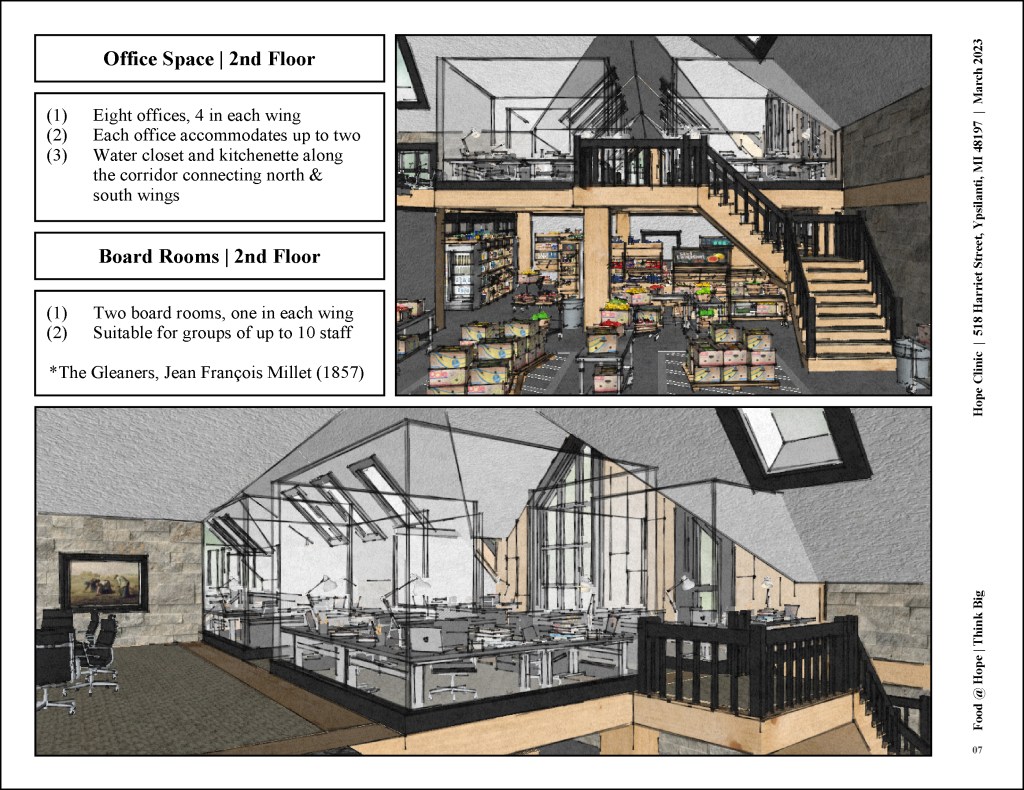
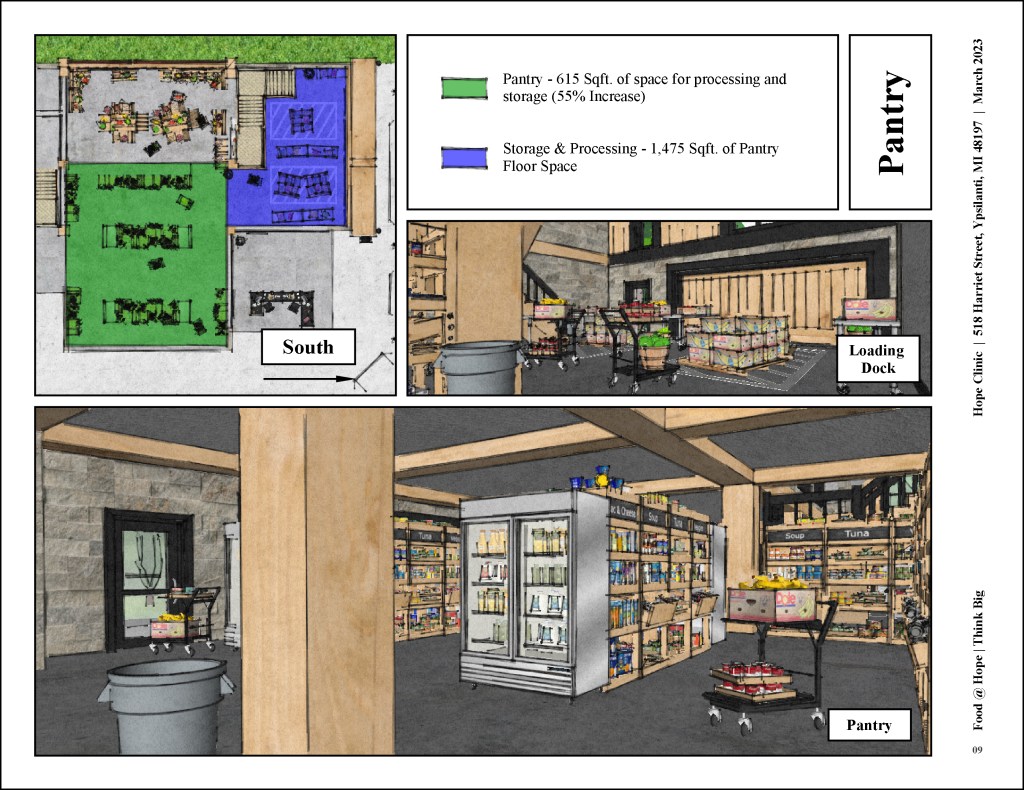
OBJECTIVE: As a provider of a comprehensive constellation of complementary health services, space in which to house Hope Clinic’s various programs has always posed a significant challenge. With the recent acquisition of an adjacent, undeveloped property, the potential for transformational expansion has become a reality. Toward that end, Hope’s management solicited a proposal for what might be possible were one to “Think Big.” This project is the result of that invocation. With 15 years of experience, first as a volunteer and then as a member of staff, this designer leveraged an intimate knowledge of the operation of Hope’s Food and Basic Needs programs to envision a solution in which the physical space allocated for all of Hope’s programs would be expanded so that Hope could better keep pace with the ever-increasing need for such services. This proposal envisions the relocation of the set of programs subsumed under the title of Food and Basic Needs to an entirely new facility, which would occupy both the newly acquired property, and that on which the Farm Stand currently stands. (Click here for more details.)

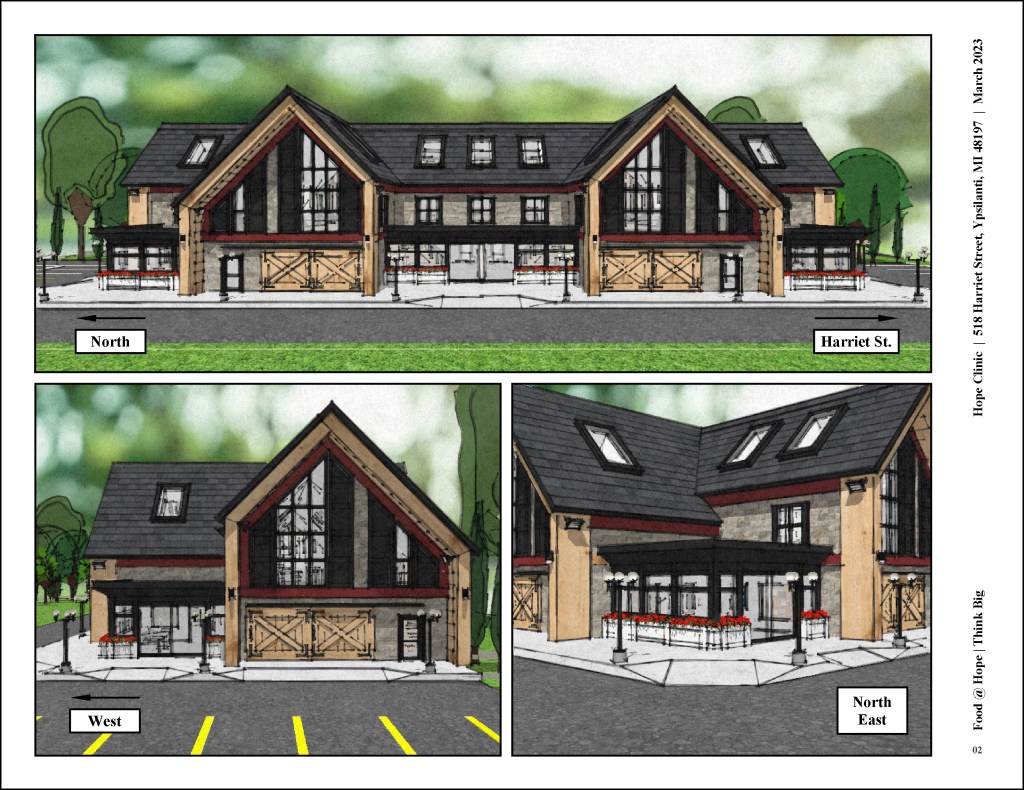
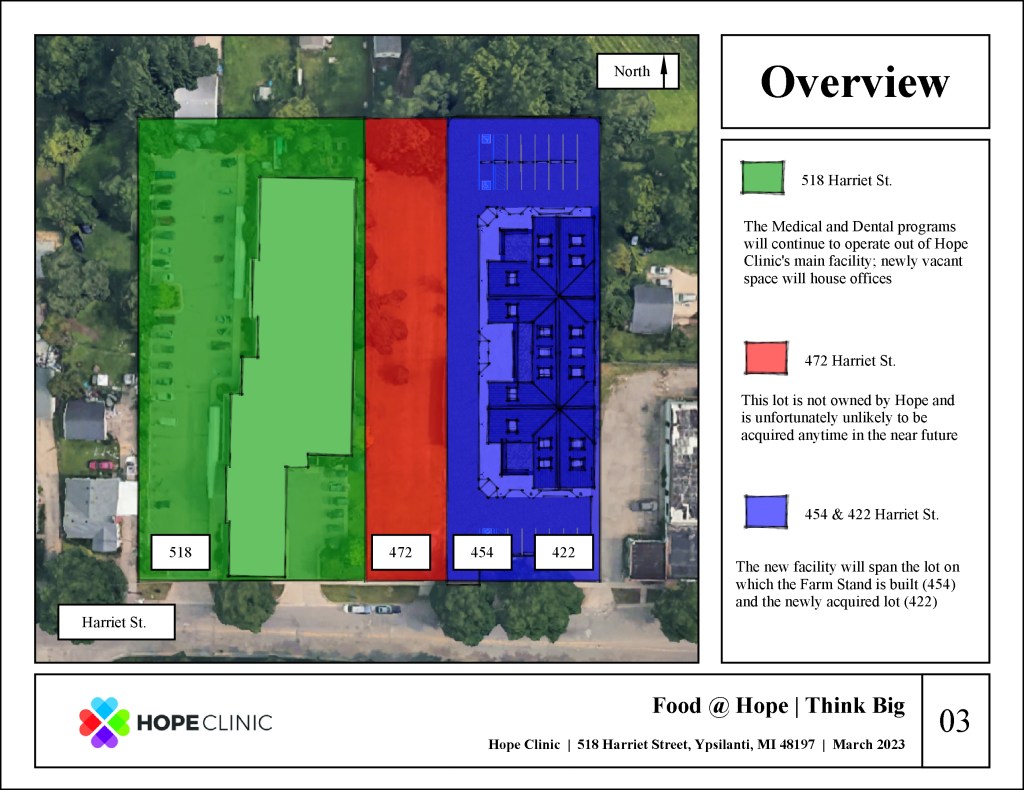
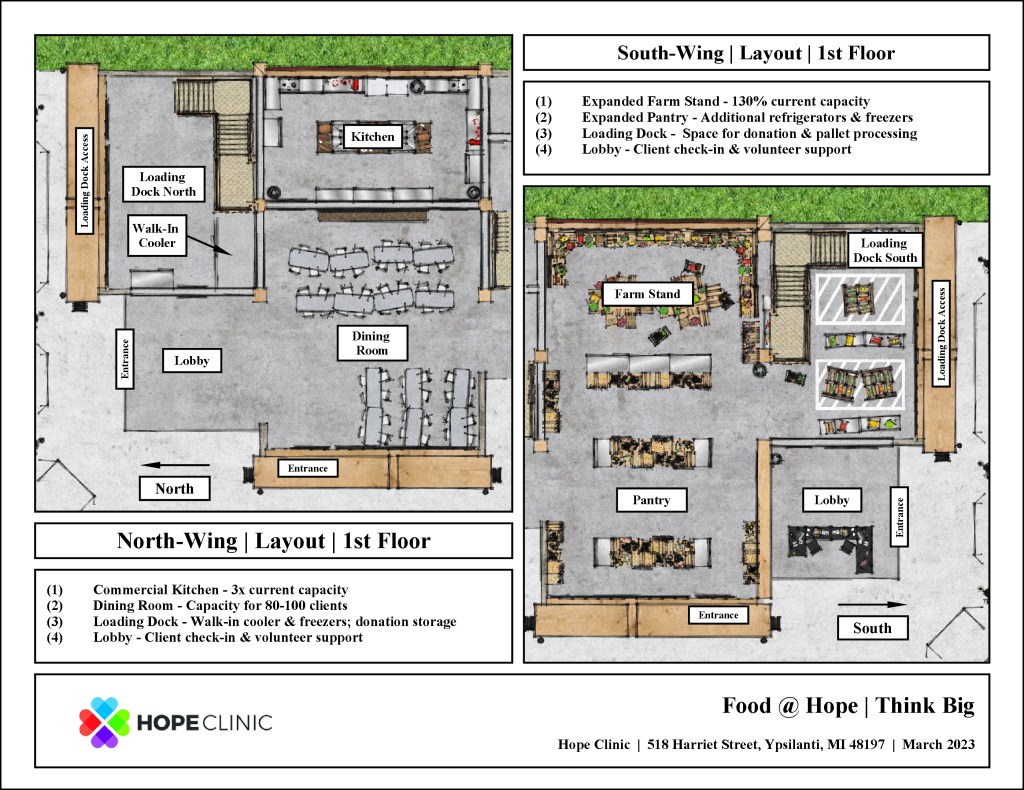
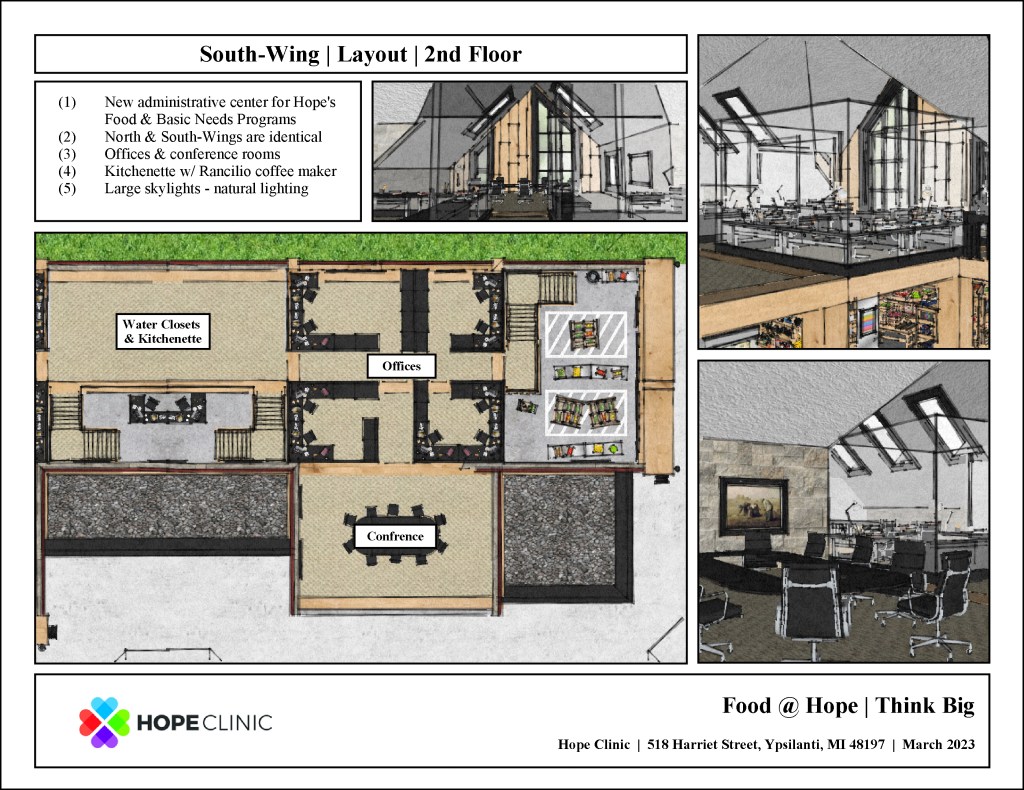


DOWNLOAD: Hope Clinic | Think Big (PDF 32.74 MB)
MORE DETAILS: This recommendation should not be interpreted as a mere reflection of the personal preferences of the programs in which this designer is most involved. It is instead the result of the assessment that of all of Hope’s programs, those which fall under the categorical framework of the Food and Basic Needs program, (1) require the most space to operate, and (2) require significant physical infrastructure. Additionally, these programs (3) generate the most complications in terms of vehicle traffic and parking. Paradoxically, it was the advent of the COVID-19 pandemic that allowed two of the most intensively utilized programs, the Hot Meal, and Farm Stand programs, to increase capacity commensurate with demand, because both models justifiably shifted away from indoor services. It is now impossible for either program to revert to the previous models because the relevant spaces have been reallocated for other essential purposes. It is thus apparent that if Hope wishes to keep abreast of the needs of the community and aspires to reinstate the pre-pandemic model of hospitality (which it certainly should), then the relocation the Food and Basic Needs programs to a new facility is the only viable option.
PROFICIENCIES: This project represents a conceptual and visionary approach to long-term planning and the enhancement of services. By considering the relocation of Food and Basic Needs programs to a new facility, this proposal addresses both current limitations and future growth opportunities. The project’s foundation is the designer’s deep understanding of the clinic’s operations and the needs of the community.
OUTCOME: To move forward with this project, a detailed implementation plan, including potential partnerships, funding strategies, and phased development, would be essential. Engaging with community stakeholders, potential donors, and urban planners early in the process would also be crucial in building momentum and ensuring the viability of the proposed expansion.
NOTE: While most of the objects presented in this document are original works, some items, such as some of the items found on the shelving units and several of the objects depicted the kitchen and offices were obtained from the 3D Warehouse and are accordingly the work of other artists.
 Jonathan B. Stella
Leave a comment